
Eight low-drama changes that improve grip, light, and reach while keeping the room looking like a bathroom rather than a ward.
Most bathroom safety advice arrives with a photograph of white plastic fixtures and a tone that suggests you should be grateful. No wonder people put it off.
The useful version is quieter than that. A bathroom becomes easier to use through small changes in grip, light, and reach, and almost none of them have to look medical.
1. Put something solid to hold on to
The single most useful change is something firm to grab where the floor is wet: at the entrance to the tub or shower, and beside the toilet.
Two rules matter more than the style you choose. It has to be screwed into the wall framing, not into tile alone, and never use the suction-cup kind as a weight-bearing support. They are fine for hanging a cloth and dangerous for anything else.
Grab bars now come in brushed nickel and matte black, and several double as a towel bar or a shelf. From the doorway, it reads as hardware.
2. Fix the floor before anything else
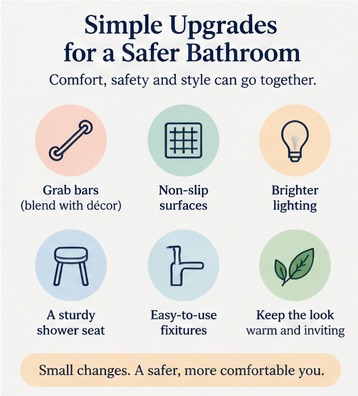
Wet tile is the actual hazard. A bath mat with a rubber backing inside the tub and a low-pile, non-slip mat outside it solve most of it.
Skip loose rugs with curling corners entirely. If a mat slides when you nudge it with your foot, it will slide when you step on it.
3. Light the room like you mean it
Most bathrooms are lit for the mirror, not for the floor. Add light where you actually move:
- A brighter bulb overhead, which costs a few dollars
- A plug-in night light near the door or the toilet
- A motion-sensor light if you get up during the night
Warm white light reduces glare on tile compared with harsh blue-white.
4. Make the taps easy on cold hands
Lever handles need no grip strength, and they’re a five-minute swap on most sinks. If a full replacement isn’t practical, there are lever adapters that fit over existing knobs.
While you’re there, check the water heater setting. Water that arrives scalding is a burn risk, especially if your hands are less sensitive to heat than they used to be.
5. Add a handheld shower head
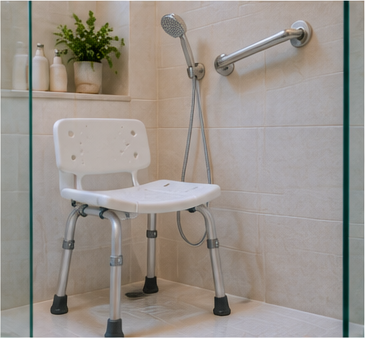
A handheld shower on a slide bar is the least clinical upgrade in this list and the most useful. You can rinse without turning, sit if you want, and clean the tub without kneeling.
6. Consider a seat, even if you don’t need one yet
A simple corner stool or a teak bench costs little and looks like furniture. Most people who buy one do it for shaving legs or washing hair and only later appreciate having it on a tired day.
7. Bring everything into easy reach
Reaching over a wet tub edge for a bottle on the far ledge is how people lose their balance.
- Keep daily items at chest height in the shower
- Use a corner caddy or a suction shelf rather than the tub rim
- Move rarely used products out of the shower entirely
8. Clear the path
Look at the route from the bed to the bathroom at two in the morning. That’s the trip that matters. Move the laundry basket, tape down or remove the runner in the hall, and keep the door swing clear.
Where to start
Do the floor and the light first. They’re the cheapest, they take an afternoon, and they remove the most common hazards. Grab bars next, once you’ve decided where your hand naturally goes when you step out.
Publisher’s note: SixtyPlus Journal is published by Zeluraskin LLC, which makes HADORI, a persimmon soap made in Japan. We disclose that on every article rather than burying it in the footer.
Leave a Reply