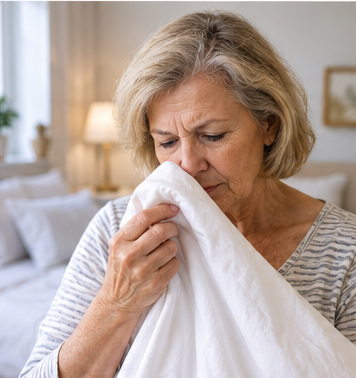
Why this Japanese soap category exists, what 2-nonenal has to do with aging, and what to look for before you buy.
If you have noticed that body odor seems different as you get older, persimmon soap is one of the products you may come across. In Japan, this concern is discussed much more openly, and persimmon-based soaps are commonly associated with age-related odor.
The important part is knowing what you are actually buying. Not every soap with Japanese-looking packaging is made in Japan, and not every bar labeled “persimmon” is formulated the same way.
Why persimmon soap is associated with aging in Japan
In Japan, age-related body odor has a name: kareishu (加齢臭). It is discussed as part of getting older rather than as a hygiene failure.
Japan also has kakishibu, made from the juice of young, unripe persimmons and traditionally used to dye fabric and protect wood. Today, persimmon is a familiar ingredient in Japanese soaps made for people concerned about age-related odor.
What changes after 40
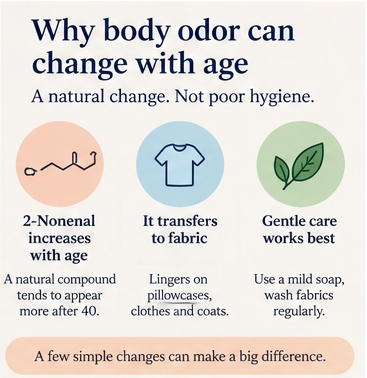
In the early 2000s, Japanese researchers studying age-related body odor identified a compound called 2-nonenal. It tends to appear in greater amounts on skin from around age 40 onward, and it behaves differently from the sweat smell most of us grew up managing. It reads as stale and faintly greasy rather than sharp.
It also does not stay on skin. It transfers to fabric and lingers there: pillowcases, collars, the lining of a favorite coat.
That explains the confusing part. You can shower, put on clean clothes, and notice the smell again later because it may also be lingering in fabric.
This is a normal part of getting older, not evidence of poor hygiene. But if a change in body odor came on suddenly, smells unusual, or arrives alongside other symptoms, that is a conversation with your doctor rather than a new soap.
How to choose a persimmon soap
These soaps vary more than the packaging suggests. Before buying, check:
- Country of manufacture, printed on the box. Cherry blossoms and Japanese characters on the front do not tell you where a soap was actually made.
- Persimmon tannin in the ingredient list, not just “persimmon” in the fragrance line.
- A base gentle enough for daily use, because a product only helps if you are comfortable using it every day.
- Claims that stay reasonable. Deodorizing is a fair claim for a soap. “Kills bacteria” and “clinically proven” on a cosmetic bar deserve closer scrutiny.
- A clear guarantee, because scent, lather and skin feel are difficult to judge until you have actually used the bar.
Two persimmon soap options worth considering
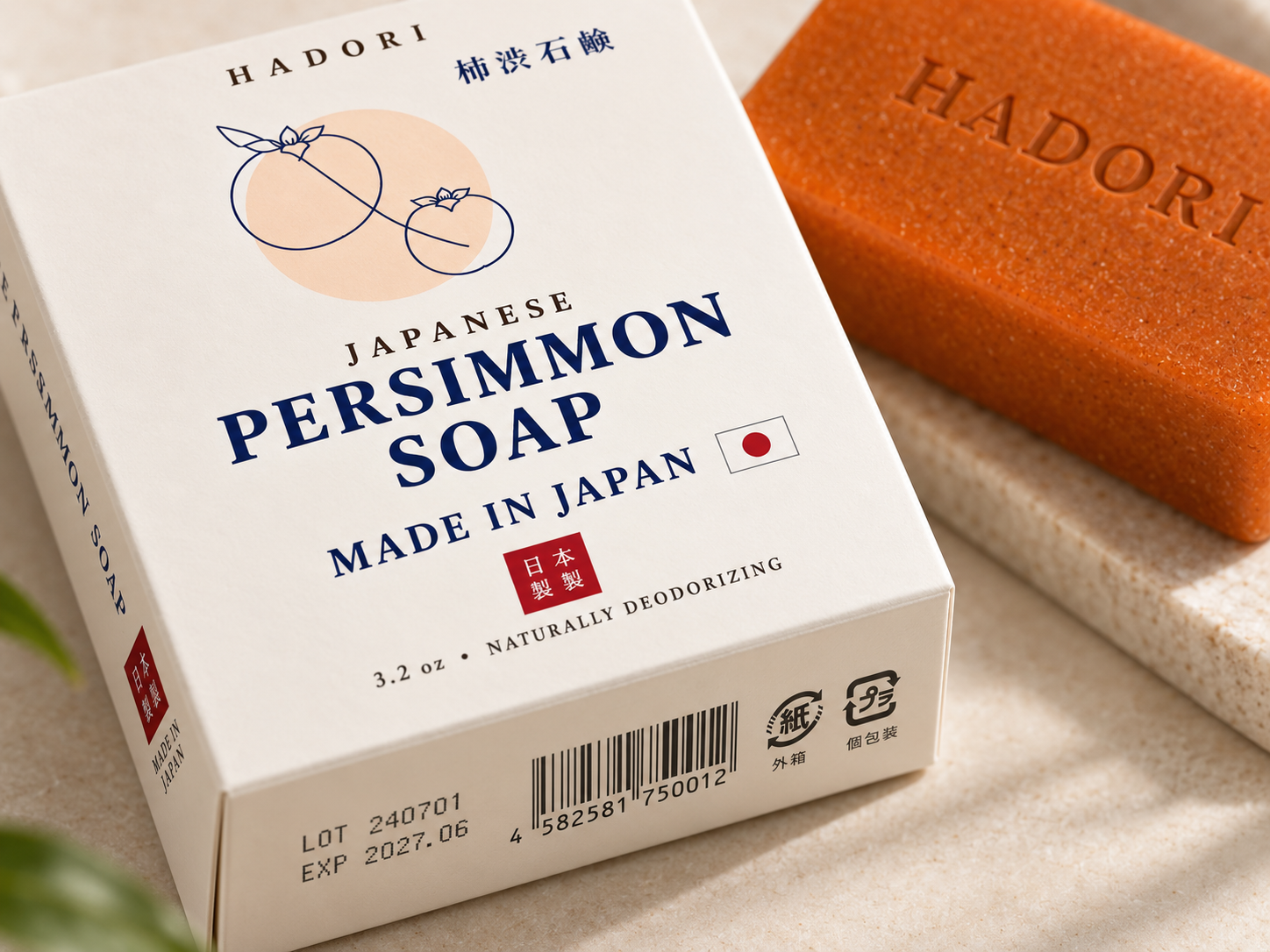
HADORI Japanese Persimmon Soap. Made in Japan by a soap maker with decades of experience, with kakishibu, a concentrated persimmon tannin, alongside sake lees, yuzu, tea extract, and jojoba. It is naturally deodorizing and mild enough for daily use on mature skin. Every bar carries a lot number traceable to its batch, and the box states where it was made. Sets of four or more ship free in the US, and the guarantee runs 60 days with no return needed. Disclosure: we publish this journal and we make this soap. Details at the end of the article.
Imported Japanese drugstore bars. Usually the cheapest per bar through marketplace sellers. The trade-off is that labels are often in Japanese only, so ingredients and country of manufacture can be harder to confirm, and the scents may be stronger.
Why washing harder can backfire
Long hot showers and hard scrubbing strip oils from skin that is already thinner and drier than it was at 40. The result can be tightness, itching, and flaking, which creates a second problem layered on the first.
Perfume has the same limitation. It sits on top of the smell rather than addressing what is on the skin or fabric, so by evening you may be carrying both.
A gentler routine that covers more ground
- Wash daily with a soap you can use from head to toe. Give particular attention to the upper back, chest, the back of the neck, and behind the ears.
- Use warm water rather than hot, rinse thoroughly, and dry completely.
- Change pillowcases twice a week rather than weekly.
- Wash at the warmest temperature the fabric allows, and resist overfilling the machine. An extra rinse can help.
- Favor cotton and linen next to skin over polyester, which can hold oily residues more stubbornly.
- Air out coats and cardigans between wears instead of hanging them straight back into a closed closet.

If you change one thing
Change the pillowcase twice a week. It costs nothing, and it is the fastest way to learn whether fabric is carrying more of the odor than your skin.
Then look at the soap you use every day. If you are specifically shopping for persimmon soap, check where it was made, what is actually in the bar, and what guarantee you get before you buy.
Publisher’s note: SixtyPlus Journal is published by Zeluraskin LLC, which makes HADORI, a persimmon soap made in Japan. We disclose that on every article rather than burying it in the footer.
Leave a Reply