Author: sun121

  • Six phone settings worth changing today

    Six phone settings worth changing today

    Bigger text, fewer unknown callers, easier contacts, and a home screen that holds only what you use.

    A phone arrives set up for a twenty-five-year-old with perfect eyesight who enjoys notifications. Almost every complaint people have about their phone is a setting, not the phone itself.

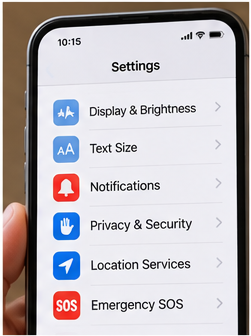
    Here are six worth changing. You don’t need to memorize where anything lives: open Settings and use the search box at the top, then type the words in bold. That works on both iPhone and Android, and it survives the updates that move menus around.

    1. Make the text bigger

    Infographic showing six helpful phone settings for older adults

    Search for text size. Most phones offer both a size slider and a bold-text switch, and using both together is far more readable than either alone.

    If the text is still small at the largest setting, look for display zoom or display size, which enlarges buttons and icons as well as words.

    Set it larger than you think you need, live with it for a day, then adjust. Almost nobody goes back down.

    2. Silence calls from numbers you don’t know

    Search for silence unknown callers on an iPhone, or caller ID and spam on Android.

    Calls from numbers not in your contacts go straight to voicemail. Your phone stops ringing at dinner, and anyone with a real reason to reach you leaves a message.

    If that feels too strict, turn on spam filtering alone and keep the ringer for everyone else.

    3. Put your emergency information on the lock screen

    Search for medical ID on an iPhone, or emergency information on Android.

    You can list medications, allergies, and emergency contacts so paramedics can see them without unlocking your phone. It takes ten minutes, it’s private day to day, and it matters exactly once.

    While you’re there, add the people you’d want called to the emergency contacts list.

    4. Make your key people reachable in one tap

    Older American man confidently using a smartphone

    Two settings do this.

    Search for favorites in the Phone app and add the four or five people you call most. Then search for do not disturb or focus and allow calls from your favorites to ring through even when the phone is quiet.

    That combination is the sweet spot: a quiet phone that still rings for family.

    5. Clear off the home screen

    The first screen should hold only what you use daily: phone, messages, camera, and perhaps two or three more.

    On an iPhone, hold an app, choose Remove App, then Remove from Home Screen, which keeps it in the App Library rather than deleting it. On Android, hold and drag to Remove, which takes it off the screen without uninstalling.

    Move everything else onto a second screen or into a folder. A home screen you can scan without reading is a phone that feels calmer.

    6. Let it update itself
    Smartphone settings screen with accessibility and safety options

    Search for automatic updates and turn them on for both the phone’s software and your apps.

    Most security problems on phones come from software that’s months behind. Automatic updates are the one setting that protects you while you’re not thinking about it.

    One more, if you take photos

    Search for live text or magnifier. The magnifier turns your camera into a reading glass, which is useful for medication labels, restaurant menus in dim light, and the small print on the back of a box.

    Publisher’s note: SixtyPlus Journal is published by Zeluraskin LLC, which makes HADORI, a persimmon soap made in Japan. We disclose that on every article rather than burying it in the footer.

  • How to spot a suspicious text message before you tap

    How to spot a suspicious text message before you tap

    Scam texts work by creating a moment of panic. A ten-second pause is the whole defense.

    A text arrives. A package can’t be delivered. Your bank has noticed an unusual charge. Your granddaughter is in trouble and needs money quickly, and please don’t tell her parents.

    Every one of those messages is built to do the same thing: get you to act before you think. The good news is that the defense is not technical knowledge. It’s a pause.

    The pause-and-check routine

    Infographic showing warning signs of suspicious text messages

    Whenever a message asks you to tap, pay, or reply with a code, do three things in order.

    1. Stop and put the phone down for ten seconds. Urgency is the scam, not the situation.
    2. Don’t use anything in the message. Not the link, not the phone number, not the "reply STOP" instruction.
    3. Check through a route you already trust. Your bank’s app, the number on the back of your card, the delivery company’s own website typed in yourself, or a direct call to the family member on the number you already have.

    If the message is real, that route will show it. Banks, delivery firms, and government agencies are all reachable without the link they sent.

    The four messages you’ll see most

    Older American man checking a phone message with a laptop nearby

    The delivery problem. A parcel is held, a small fee is owed, click here. Real carriers don’t collect customs fees by text link, and you can always check a tracking number on the carrier’s own site.

    The account warning. Your account is locked, verify now. Open your bank’s app directly. If nothing is wrong there, nothing is wrong.

    The family emergency. A grandchild in trouble, an accident, a lawyer, and secrecy. Secrecy is the tell. Call the family member on the number you already have, or call another relative. A real emergency survives a phone call.

    The wrong number that turns friendly. A stranger texts as if they know you, apologizes, then keeps chatting for days. These lead to investment or cryptocurrency requests. Warmth is the hook, and the money comes later.

    Signals worth noticing

    Close-up of a suspicious delivery text message on a smartphone
    • The message asks for a code that was just texted to you. Nobody legitimate ever needs that code. Not your bank, not a delivery company, not tech support.
    • The link looks almost right: an extra word, a hyphen, an unusual ending after the company name.
    • The greeting is generic where a real company would use your name, or your name is used oddly.
    • Payment is requested by gift card, wire transfer, or an app like Zelle or Venmo. No legitimate agency collects that way.
    • The grammar is slightly off, though don’t rely on this one. Scam writing has improved.

    What to do with a suspicious text

    Don’t reply, don’t tap, and don’t call the number. In the US, forward it to 7726, which spells SPAM, so your carrier can block the sender. Then delete it and block the number.

    If you did tap a link or share information, call your bank on the number on your card, change the password for the account involved, and report it at reportfraud.ftc.gov.

    The one rule to keep

    No real organization will ever require you to act within minutes, keep a secret from your family, or pay with a gift card. When any of those three appear, the message is a scam, however professional it looks.

    There’s no embarrassment in being targeted. These messages go out by the million, and they are designed by people who do this for a living.

    Publisher’s note: SixtyPlus Journal is published by Zeluraskin LLC, which makes HADORI, a persimmon soap made in Japan. We disclose that on every article rather than burying it in the footer.

  • Set up the kitchen around comfortable reach

    Set up the kitchen around comfortable reach

    Move the things you use every day into the space between your waist and your shoulders, and let the rest of the kitchen be storage.

    Most kitchens are organized by the logic of whoever installed the cabinets. Heavy pans go in the lowest cupboard, everyday plates go above shoulder height, and the good glasses live where nobody can reach them at all.

    You don’t need a renovation to fix this. You need an afternoon and a willingness to put things where you use them rather than where they’ve always lived.

    Find your comfortable zone

    Infographic showing comfortable reach zones and kitchen setup tips

    Stand at your counter and put your hands out. The band between your waist and your shoulders, without stretching or crouching, is your comfortable zone. Everything you touch daily belongs there.

    Below it, low and awkward, is for light and rarely used items. Above it is for things you can afford to need a step stool for, once a month at most.

    This inverts the usual arrangement, and that’s the point.

    Move the heavy things down, not up

    Lifting a full pot down from a high shelf is where kitchen injuries come from. Cast iron, mixers, large bowls, and anything full of liquid belong at or below waist height, where you can slide rather than lift.

    If you have a deep base cabinet, a pull-out shelf turns it from a cave into a drawer for about the cost of a nice frying pan. It is the best money most people spend in a kitchen.

    Decant what’s heavy

    A full bag of flour, a gallon of oil, or a bulk box of detergent doesn’t have to be handled as one unit. Decant into smaller containers you can lift with one hand, and keep the bulk container somewhere it doesn’t need to move.

    Choose containers you can open wet and read at a glance. Clear sides beat labels you have to squint at.

    Build one work zone that does most of the work

    Older American woman preparing vegetables in a well-lit kitchen

    Pick the stretch of counter with the best light, ideally near the sink, and make it the place where most cooking happens. Within arm’s reach of it, keep:

    • The knives and the board
    • Salt, pepper, oil, and the three spices you actually use
    • A bowl for scraps
    • The tools you reach for daily, standing in a jar rather than buried in a drawer

    Everything else can live further away. A single well-equipped zone beats a kitchen where every task requires crossing the room twice.

    Make the things you use daily visible

    Pull-out kitchen drawers with pots, dishes and pantry containers

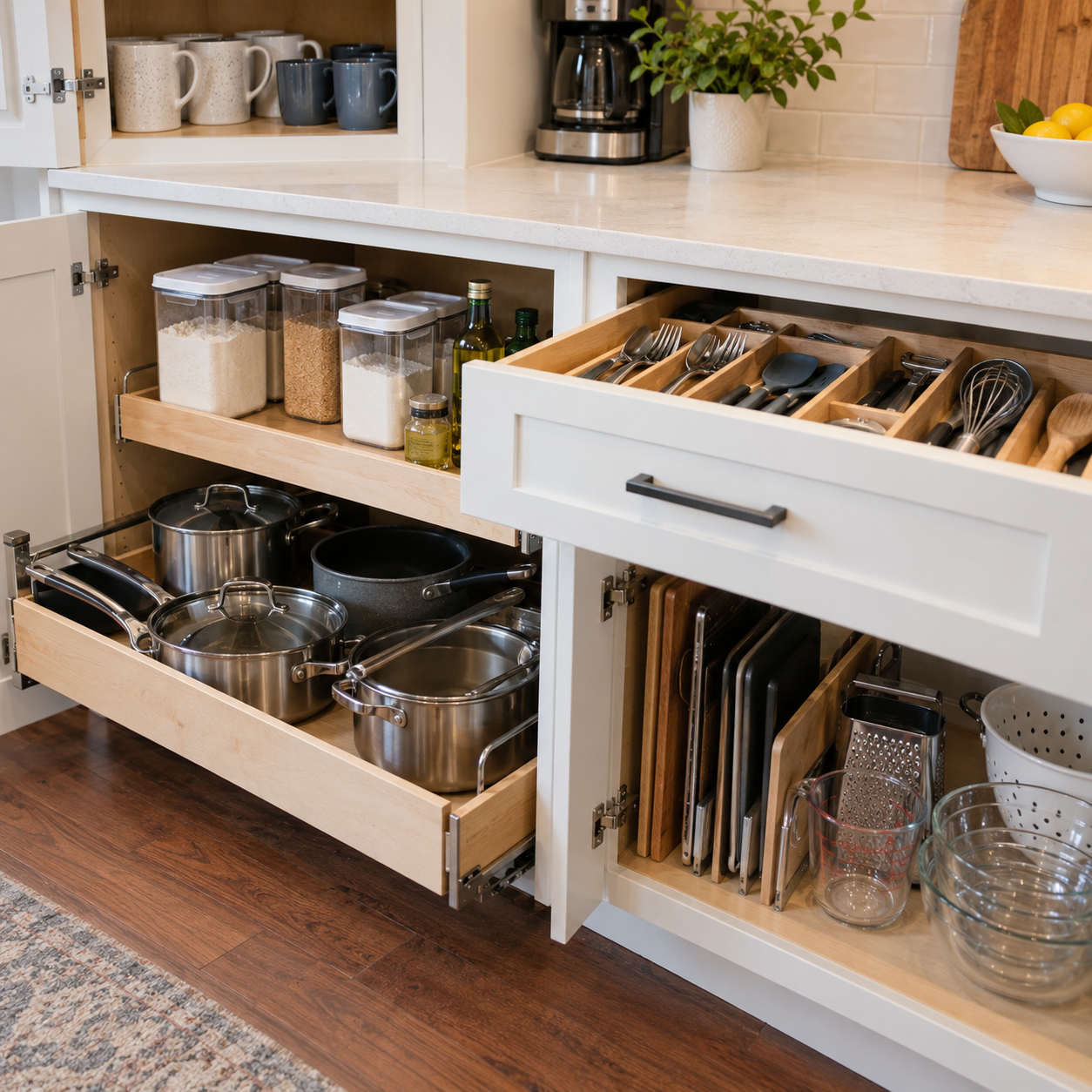
    Open shelving isn’t for everyone, but a few items left out saves opening and closing doors dozens of times a day: the kettle, the everyday mugs, the pan you use most, the olive oil.

    If leaving things out bothers you, use one deep drawer as the daily drawer and accept that it will never look like the picture in a catalog.

    Light where your hands are

    Overhead lights cast a shadow exactly where you chop. Stick-on rechargeable lights under the wall cabinets cost very little and make the counter dramatically easier to work on, especially in the evening.

    The step stool question

    If you have anything you can only reach with a step, make sure it’s a proper stool with a handrail, not a chair. Better still, spend twenty minutes moving whatever is up there down here, and then the question doesn’t arise at all.

    Publisher’s note: SixtyPlus Journal is published by Zeluraskin LLC, which makes HADORI, a persimmon soap made in Japan. We disclose that on every article rather than burying it in the footer.

  • A safer bathroom without making it feel clinical

    A safer bathroom without making it feel clinical

    Eight low-drama changes that improve grip, light, and reach while keeping the room looking like a bathroom rather than a ward.

    Most bathroom safety advice arrives with a photograph of white plastic fixtures and a tone that suggests you should be grateful. No wonder people put it off.

    The useful version is quieter than that. A bathroom becomes easier to use through small changes in grip, light, and reach, and almost none of them have to look medical.

    1. Put something solid to hold on to

    The single most useful change is something firm to grab where the floor is wet: at the entrance to the tub or shower, and beside the toilet.

    Two rules matter more than the style you choose. It has to be screwed into the wall framing, not into tile alone, and never use the suction-cup kind as a weight-bearing support. They are fine for hanging a cloth and dangerous for anything else.

    Grab bars now come in brushed nickel and matte black, and several double as a towel bar or a shelf. From the doorway, it reads as hardware.

    2. Fix the floor before anything else

    Infographic showing safer bathroom upgrades for older adults

    Wet tile is the actual hazard. A bath mat with a rubber backing inside the tub and a low-pile, non-slip mat outside it solve most of it.

    Skip loose rugs with curling corners entirely. If a mat slides when you nudge it with your foot, it will slide when you step on it.

    3. Light the room like you mean it

    Most bathrooms are lit for the mirror, not for the floor. Add light where you actually move:

    • A brighter bulb overhead, which costs a few dollars
    • A plug-in night light near the door or the toilet
    • A motion-sensor light if you get up during the night

    Warm white light reduces glare on tile compared with harsh blue-white.

    4. Make the taps easy on cold hands

    Lever handles need no grip strength, and they’re a five-minute swap on most sinks. If a full replacement isn’t practical, there are lever adapters that fit over existing knobs.

    While you’re there, check the water heater setting. Water that arrives scalding is a burn risk, especially if your hands are less sensitive to heat than they used to be.

    5. Add a handheld shower head

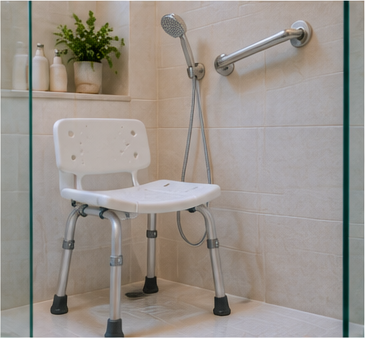
    Modern shower with grab bar, handheld shower and shower seat

    A handheld shower on a slide bar is the least clinical upgrade in this list and the most useful. You can rinse without turning, sit if you want, and clean the tub without kneeling.

    6. Consider a seat, even if you don’t need one yet

    A simple corner stool or a teak bench costs little and looks like furniture. Most people who buy one do it for shaving legs or washing hair and only later appreciate having it on a tired day.

    7. Bring everything into easy reach

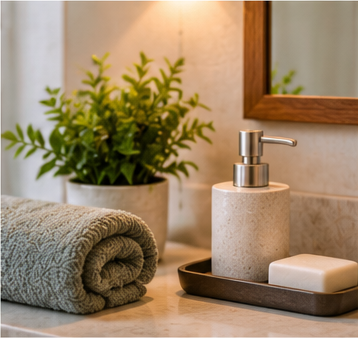
    Warm bathroom counter with simple functional details

    Reaching over a wet tub edge for a bottle on the far ledge is how people lose their balance.

    • Keep daily items at chest height in the shower
    • Use a corner caddy or a suction shelf rather than the tub rim
    • Move rarely used products out of the shower entirely

    8. Clear the path

    Look at the route from the bed to the bathroom at two in the morning. That’s the trip that matters. Move the laundry basket, tape down or remove the runner in the hall, and keep the door swing clear.

    Where to start

    Do the floor and the light first. They’re the cheapest, they take an afternoon, and they remove the most common hazards. Grab bars next, once you’ve decided where your hand naturally goes when you step out.

    Publisher’s note: SixtyPlus Journal is published by Zeluraskin LLC, which makes HADORI, a persimmon soap made in Japan. We disclose that on every article rather than burying it in the footer.
  • A compact personal-care checklist for easier travel

    A compact personal-care checklist for easier travel

    Pack the routine you already have, keep the first night simple, and stop opening new products in a hotel bathroom.

    Most travel packing advice is written for people who own matching luggage and enjoy folding. This is for the rest of us, and it starts with one principle: travel is not the time to try anything new.

    The routine you use at home is the one that works. Pack that, in smaller quantities, and leave the experimenting for a Tuesday at home when a reaction or a bad night’s sleep costs you nothing.

    Start with the first night, not the whole trip

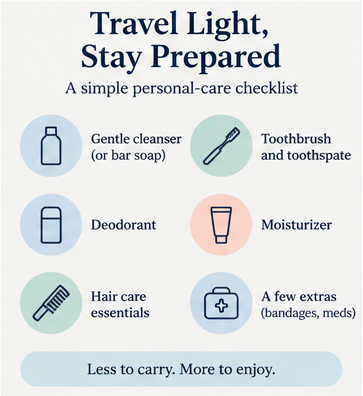
    Infographic showing a compact personal-care checklist for travel

    Whatever else you do, pack one small bag with what you need between arriving and going to sleep. Medication, toothbrush, toothpaste, soap, a face cloth, glasses, phone charger, and whatever you sleep in.

    That bag goes in your carry-on. If a suitcase is delayed or you arrive at eleven at night, you’re still fine, and you don’t have to unpack anything to be fine.

    Medication first, and in its original bottles

    Keep every medication in the labeled container it came in, and keep all of it in your carry-on, never in checked luggage.

    Pack a few extra days’ worth beyond the length of the trip. Delays happen, pharmacies in unfamiliar places take time, and running out is the one packing mistake that’s genuinely hard to fix.

    A written list of what you take, with doses, is worth the five minutes. Keep a paper copy in your wallet and a photo of it on your phone.

    Fewer liquids, fewer problems

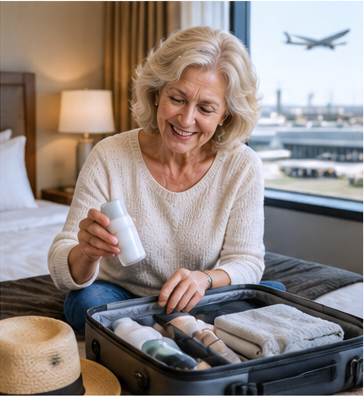
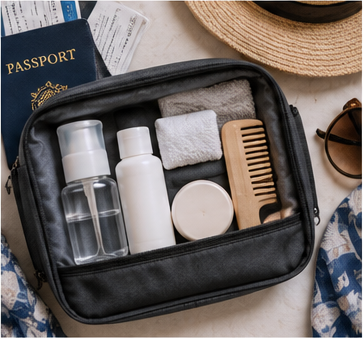
    Compact personal-care travel kit with labeled toiletries

    Liquids are the source of most toiletry-bag trouble: airline limits, leaks in the heat, and bottles that weigh far more than they should.

    • A bar of soap isn’t a liquid. It doesn’t compete for space in your liquids bag and it can’t leak. If you already use a bar at home, take the one you’ve started rather than a new one; it’s smaller, drier, and lighter.
    • Solid deodorant travels better than a gel or a spray.
    • Decant carefully, and label. Unlabeled containers are hard to identify later and awkward at security. If you can’t label it clearly, buy the travel size.
    • Bag everything liquid separately, even in a suitcase. Cabin pressure and heat have ruined more clothes than turbulence.

    Airline liquid rules do change, so check your airline or the security agency’s site in the week before you fly rather than relying on what was true last year.

    The comfort items people forget

    • Lip balm and a small moisturizer, since planes and hotel heating are drying
    • A nail file, which prevents a snag becoming a two-day annoyance
    • Any grooming item you use weekly rather than daily, since trips overlap with it more often than you’d expect
    • A spare pair of glasses, or at least a copy of your prescription

    Keep the hotel bathroom simple

    Older American couple traveling with luggage

    Unpack the same way every trip: everything out of the bag and onto one shelf or towel, in the order you use it. It takes two minutes and saves hunting through a bag at six in the morning in a room you don’t know.

    And leave the hotel’s tiny bottles alone unless you forgot something. They are the definition of trying a new product at the worst possible time.

    Publisher’s note: SixtyPlus Journal is published by Zeluraskin LLC, which makes HADORI, a persimmon soap made in Japan. We disclose that on every article rather than burying it in the footer.

  • What makes an everyday product easier to use?

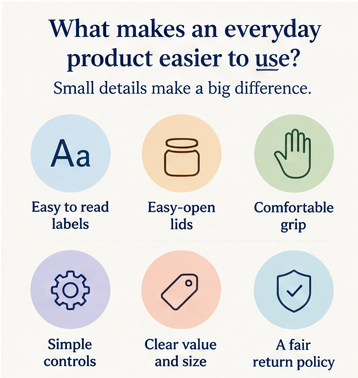
    What makes an everyday product easier to use?

    A shopping checklist for labels you can read, lids you can open, and value you can actually calculate.

    There’s a particular kind of irritation that has nothing to do with age and everything to do with design. The shampoo and the conditioner in identical bottles with the writing in silver on white. The pill bottle that requires two hands and a good mood. The kitchen gadget with six buttons, none of them labeled.

    None of that is your eyesight or your grip failing. It’s a product that was designed to look good in a photograph rather than to be used at seven in the morning.

    Here’s what to check before you buy, whether you’re in a store or on a phone screen.

    Can you read it without hunting for glasses?

    Infographic showing readable labels, easy-open lids, grip and simple controls

    Look at the part of the label you’ll actually need later: directions, warnings, the ingredient list. Dark type on a pale background beats pale type on a dark one, and matte beats glossy, because glossy throws glare under a bathroom light.

    For anything you’ll use in the shower, ask a blunter question: can you tell it apart from the bottle next to it with wet eyes and no glasses? Different shapes and different colors solve that. Identical bottles never will.

    Can you hold it, open it, and use it wet?

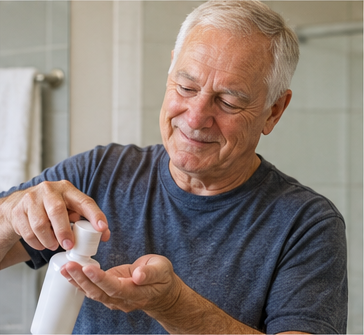
    Older American man comfortably using a pump bottle

    Pick it up in the store if you can. Grip matters most when your hands are wet or cold.

    • Texture beats smoothness. A ridged or matte surface stays in your hand.
    • Levers beat knobs. Anything you twist hard is harder in January.
    • Pumps beat squeeze bottles for anything thick, and both beat lids you have to unscrew one-handed in a shower.
    • Weight when full is the real weight. A jug is fine empty and awkward at four pounds.

    Are the controls obvious without the manual?

    Good controls tell you what they do when you look at them. Buttons that click, dials with a physical stop, words instead of symbols.

    Be suspicious of touch panels that need a firm flat finger, appliances where one button does four things depending on how long you hold it, and anything that needs an app to do its main job.

    What does it cost per use?

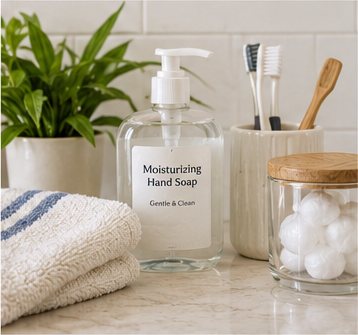
    Everyday bathroom products with clear labels and simple packaging

    Price per bottle tells you very little. Divide by the number of uses instead.

    A larger container is usually cheaper per use but harder to handle, so the sweet spot is often the medium size plus a refill. Check that refills actually exist and are still stocked before you commit, because a discontinued refill turns a good product into an expensive one.

    Can you send it back?

    A clear returns policy is worth more than most marketing claims, especially for anything with a scent, a texture, or a fit. Look for a stated window, and read whether you pay return shipping.

    Five questions to ask in the aisle

    1. Can I read the directions right now, in this light?
    2. Can I open it with wet hands?
    3. Do I know what every control does by looking at it?
    4. What does one use cost?
    5. What happens if I don’t like it?

    If a product fails three of those, put it back, no matter how good the front of the box looks.

    Publisher’s note: SixtyPlus Journal is published by Zeluraskin LLC, which makes HADORI, a persimmon soap made in Japan. We disclose that on every article rather than burying it in the footer.
  • Persimmon Soap for Age-Related Body Odor: What Women Should Know

    Persimmon Soap for Age-Related Body Odor: What Women Should Know

    Why this Japanese soap category exists, what 2-nonenal has to do with aging, and what to look for before you buy.

    If you have noticed that body odor seems different as you get older, persimmon soap is one of the products you may come across. In Japan, this concern is discussed much more openly, and persimmon-based soaps are commonly associated with age-related odor.

    The important part is knowing what you are actually buying. Not every soap with Japanese-looking packaging is made in Japan, and not every bar labeled “persimmon” is formulated the same way.

    Why persimmon soap is associated with aging in Japan

    In Japan, age-related body odor has a name: kareishu (加齢臭). It is discussed as part of getting older rather than as a hygiene failure.

    Japan also has kakishibu, made from the juice of young, unripe persimmons and traditionally used to dye fabric and protect wood. Today, persimmon is a familiar ingredient in Japanese soaps made for people concerned about age-related odor.

    What changes after 40

    Infographic explaining 2-nonenal, fabric transfer and gentle care

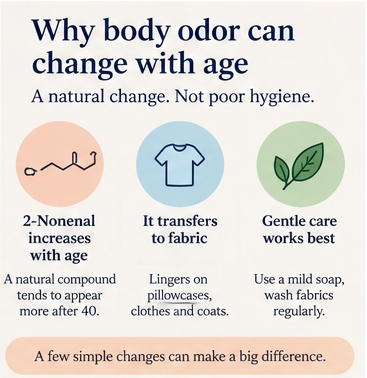
    In the early 2000s, Japanese researchers studying age-related body odor identified a compound called 2-nonenal. It tends to appear in greater amounts on skin from around age 40 onward, and it behaves differently from the sweat smell most of us grew up managing. It reads as stale and faintly greasy rather than sharp.

    It also does not stay on skin. It transfers to fabric and lingers there: pillowcases, collars, the lining of a favorite coat.

    That explains the confusing part. You can shower, put on clean clothes, and notice the smell again later because it may also be lingering in fabric.

    This is a normal part of getting older, not evidence of poor hygiene. But if a change in body odor came on suddenly, smells unusual, or arrives alongside other symptoms, that is a conversation with your doctor rather than a new soap.

    How to choose a persimmon soap

    These soaps vary more than the packaging suggests. Before buying, check:

    • Country of manufacture, printed on the box. Cherry blossoms and Japanese characters on the front do not tell you where a soap was actually made.
    • Persimmon tannin in the ingredient list, not just “persimmon” in the fragrance line.
    • A base gentle enough for daily use, because a product only helps if you are comfortable using it every day.
    • Claims that stay reasonable. Deodorizing is a fair claim for a soap. “Kills bacteria” and “clinically proven” on a cosmetic bar deserve closer scrutiny.
    • A clear guarantee, because scent, lather and skin feel are difficult to judge until you have actually used the bar.

    Two persimmon soap options worth considering

    HADORI Japanese Persimmon Soap box and orange soap bars

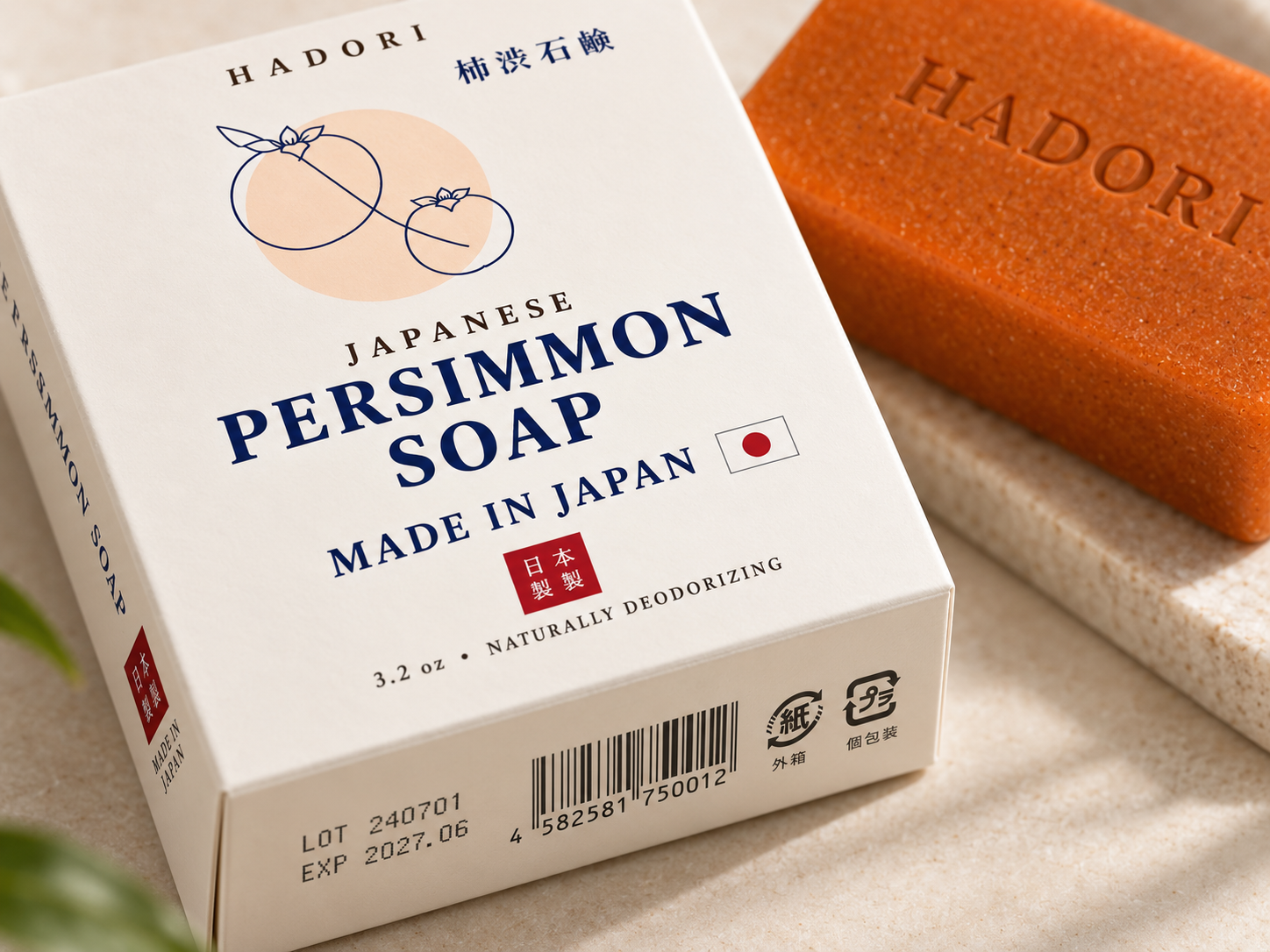
    HADORI Japanese Persimmon Soap. Made in Japan by a soap maker with decades of experience, with kakishibu, a concentrated persimmon tannin, alongside sake lees, yuzu, tea extract, and jojoba. It is naturally deodorizing and mild enough for daily use on mature skin. Every bar carries a lot number traceable to its batch, and the box states where it was made. Sets of four or more ship free in the US, and the guarantee runs 60 days with no return needed. Disclosure: we publish this journal and we make this soap. Details at the end of the article.

    Imported Japanese drugstore bars. Usually the cheapest per bar through marketplace sellers. The trade-off is that labels are often in Japanese only, so ingredients and country of manufacture can be harder to confirm, and the scents may be stronger.

    Why washing harder can backfire

    Long hot showers and hard scrubbing strip oils from skin that is already thinner and drier than it was at 40. The result can be tightness, itching, and flaking, which creates a second problem layered on the first.

    Perfume has the same limitation. It sits on top of the smell rather than addressing what is on the skin or fabric, so by evening you may be carrying both.

    A gentler routine that covers more ground

    • Wash daily with a soap you can use from head to toe. Give particular attention to the upper back, chest, the back of the neck, and behind the ears.
    • Use warm water rather than hot, rinse thoroughly, and dry completely.
    • Change pillowcases twice a week rather than weekly.
    • Wash at the warmest temperature the fabric allows, and resist overfilling the machine. An extra rinse can help.
    • Favor cotton and linen next to skin over polyester, which can hold oily residues more stubbornly.
    • Air out coats and cardigans between wears instead of hanging them straight back into a closed closet.
    Older American grandmother warmly hugging her granddaughter

    If you change one thing

    Change the pillowcase twice a week. It costs nothing, and it is the fastest way to learn whether fabric is carrying more of the odor than your skin.

    Then look at the soap you use every day. If you are specifically shopping for persimmon soap, check where it was made, what is actually in the bar, and what guarantee you get before you buy.

    Publisher’s note: SixtyPlus Journal is published by Zeluraskin LLC, which makes HADORI, a persimmon soap made in Japan. We disclose that on every article rather than burying it in the footer.
  • Hello world!

    Welcome to WordPress. This is your first post. Edit or delete it, then start writing!

  • 5 Best Persimmon Soaps for Age-Related Body Odor: HADORI vs. Mirai, Kaori, Kakiyu & Swarva

    5 Best Persimmon Soaps for Age-Related Body Odor: HADORI vs. Mirai, Kaori, Kakiyu & Swarva

    Body odor can change with age even when bathing habits stay exactly the same. That change is common, and it is not a sign of poor hygiene. Persimmon soaps offer a simple way to adjust a daily cleansing routine without adding heavy perfumes or complicated extra steps.

    We compared five widely discussed options—HADORI, Mirai Clinical, Kaori, Kakiyu and Swarva—looking at formula transparency, manufacturing information, scent, mature-skin comfort, bar size and purchase protection.

    The quick answer

    HADORI is our best overall choice. Its finished soap is made in Japan, its complete ingredient list and 3.2-ounce bar size are clearly disclosed, and its balanced formula combines persimmon with green tea, jojoba, yuzu and sake lees. The yuzu gives it a light citrus note in the shower that does not linger like perfume.

    Mirai is the strongest established alternative, especially for shoppers who want an unscented option. Kaori emphasizes a warmer, more sensory bathing experience. Kakiyu stands out for fermented kakishibu, while Swarva uses a short formula with several ingredients selected for a more comfortable skin feel.

    Our persimmon soap comparison

    SoapBest forWhat stands outWhat to consider
    HADORIBest overallMade in Japan; full formula disclosed; 3.2 oz; persimmon, green tea, jojoba, yuzu and sake leesContains yuzu peel oil, so very sensitive skin should be patch-tested
    Mirai ClinicalEstablished alternativeJapanese persimmon and green tea; unscented and scented choicesPremium positioning; performance percentages are brand-provided
    KaoriWarm, spa-like routinePersimmon-focused bar with a sensory presentationPublished ingredient details vary, so check the package label
    KakiyuFermented kakishibu100 g bar centered on fermented astringent-persimmon tanninAvailability and delivery timing may vary
    SwarvaShort, moisture-focused formulaPersimmon and green tea with coconut oil, hyaluronic acid and hydrolyzed collagenRinse-off ingredients may offer more modest benefits than leave-on skincare

    Product details and return terms can change. Check the current label and store policy before purchasing.

    Why persimmon soap is used for age-related body odor

    One compound associated with changes in body scent later in life is 2-nonenal. It forms when certain fats on the surface of the skin oxidize and is often described as grassy, waxy or slightly musty. It is only one part of body odor, but research has found that it becomes more noticeable with age.

    Infographic explaining 2-nonenal, fabric transfer and gentle care

    Persimmon contains plant polyphenols known as tannins, which is why persimmon-derived ingredients appear in many Japanese odor-care products. A small Japanese study tested one particular soap containing polyphenols from teas and astringent persimmon. After four weeks of daily use, researchers reported lower measured 2-nonenal among the 20 men who participated.

    That result is encouraging, but it does not prove that every bar labeled “persimmon soap” performs the same way. Concentration, the complete formula and regular use all matter. None of the five finished products below was tested against the others in that study.

    How we compared the five soaps

    This comparison is based on publicly disclosed product information rather than a commissioned laboratory test. We gave the most weight to:

    • Formula transparency: Is a complete ingredient list easy to find?
    • Verifiable origin: Does the company clearly state where the finished bar is manufactured?
    • Skin comfort: Does the formula include glycerin, oils or other ingredients that may help a cleansing bar feel less stripping?
    • Scent: Is it light, strongly fragranced or available unscented?
    • Practical value: Are bar size, buying options and return terms clearly explained?
    • Responsible claims: Does the product stay within cosmetic cleansing and odor-care language rather than promising a medical cure?

    2. Mirai Clinical Deodorizing Soap — Best established alternative

    Mirai Clinical is one of the better-known names in this category. Its soap is built around Japanese persimmon and green tea, and the brand offers both unscented and scented choices.

    That selection makes Mirai useful for shoppers who already know whether they prefer no added scent or want a more noticeable shower experience. The 100-gram bar is also slightly larger than many standard bath bars.

    Best for: Shoppers who value an established persimmon-soap brand and want a choice between unscented and fragranced bars.

    Keep in mind: Mirai is commonly positioned as a premium single bar. Its strongest percentage-based performance statements come from the brand, so we treat them as company-provided information rather than an independent head-to-head result.

    3. Kaori Original Persimmon Soap — Best for a spa-like routine

    Kaori takes a softer, more sensory approach. The brand highlights persimmon extract and presents the bar as part of a warm, confidence-building bathing routine rather than a clinical-looking treatment.

    Best for: Someone who prefers a more sensory bathing experience and presentation.

    Keep in mind: Ingredient descriptions across Kaori’s current web pages are not completely consistent, and the manufacturing country of the finished bar is not clearly stated. Readers with allergies or reactive skin should check the ingredient panel on the package before using it.

    4. Kakiyu Persimmon Soap — Best fermented kakishibu option

    Kakiyu focuses on kakishibu, the fermented tannin-rich liquid traditionally made from unripe astringent persimmons. The brand describes its 100-gram bar as made in Japan and designed for daily odor care with a faint, clean scent.

    Best for: Readers who specifically want a Japan-made bar centered on fermented kakishibu rather than standard persimmon fruit extract.

    Keep in mind: Stock and delivery timing may vary. Shoppers with sensitivities should confirm the complete package label before use.

    5. Swarva Deodorizing Persimmon Soap — Best short, moisture-focused formula

    Swarva lists six primary components: persimmon extract, green tea extract, coconut oil, hydrolyzed collagen, hyaluronic acid and a natural soap base. The short list makes its formula easy to understand at a glance.

    Hyaluronic acid and coconut oil are familiar skin-conditioning ingredients, although benefits from collagen and other skincare ingredients in a rinse-off bar are usually more modest than in a leave-on product.

    Best for: Someone who wants a simple persimmon-and-green-tea formula with moisture-focused supporting ingredients.

    Keep in mind: “Natural soap base” is a broad description. Very reactive skin should still be patch-tested, and shoppers should check the current package label.

    How to choose the right persimmon soap

    Start with scent sensitivity

    If fragrance easily causes itching, headaches or discomfort, begin with an unscented option and read the complete label. “Natural scent” does not necessarily mean fragrance-free; citrus peel oils and other aromatic botanicals can still affect sensitive skin.

    Check where the finished soap is made

    Japanese writing, a persimmon illustration or the phrase “Japanese formula” does not confirm that a finished bar was manufactured in Japan. If origin matters to you, look for a direct country-of-manufacture statement.

    Read the full ingredient list

    Featured ingredients are not always the complete formula. Check for essential oils and known personal allergens. A shorter list is not automatically better, but a clearly disclosed list makes an informed decision easier.

    Compare cost per ounce—not only the sticker price

    Bar weights vary, as do multipack discounts and shipping charges. Prices change frequently, so calculate from the offer actually in your cart rather than relying on an old comparison.

    How to get better results from any bar

    1. Wet the bar and build a comfortable lather in your hands or on a soft washcloth.
    2. Cleanse areas where odor tends to linger, including behind the ears, around the neck, underarms, chest and upper back.
    3. Do not scrub mature skin aggressively. Gentle, consistent cleansing is usually more comfortable than repeated harsh washing.
    4. Rinse thoroughly and apply a simple moisturizer afterward if your skin feels dry.
    5. Store the bar on a draining dish rather than leaving it in standing water.
    6. Wash towels, pillowcases, collars and sleepwear regularly, since body oils can remain on fabric even after the skin is clean.
    Older American grandmother warmly hugging her granddaughter

    Frequently asked questions

    Can persimmon soap remove 2-nonenal?

    Persimmon-derived polyphenols have been studied in odor-care formulas, and cleansing helps remove skin oils and odor-bearing residue. However, research on one particular formula cannot be applied automatically to every persimmon soap. Results vary, and no cosmetic soap permanently changes the aging process.

    Is age-related body odor a sign of poor hygiene?

    No. Skin oils and their chemical composition can change with age even in people who bathe regularly. More forceful scrubbing is not necessarily the answer and can leave mature skin irritated or dry.

    Can I use persimmon soap every day?

    Most of these products are sold for daily cleansing, but your skin should guide the frequency. Reduce use if you notice tightness, burning, redness or itching. Avoid the eyes and broken skin, and follow the package directions.

    When should I speak with a healthcare professional?

    Seek medical advice if body odor changes suddenly, becomes unusually strong, occurs with a rash or other symptoms, or does not improve with routine hygiene. Medication, infection and some health conditions can change body scent. Persimmon soap is a cosmetic cleanser, not a diagnostic tool or medical treatment.

    Our final verdict

    For most readers, HADORI is the strongest all-around choice. Its Japan-made origin, complete ingredient disclosure, full-size 3.2-ounce bar, balanced botanical formula and light, short-lived scent make it the easiest product here to evaluate and use with confidence.

    Mirai is the better alternative when an unscented bar or several scent choices matter most. Kaori offers a warmer bathing experience. Kakiyu is the most distinctive option for fermented kakishibu, while Swarva stands out for its short, moisture-focused formula.

    Whichever one you choose, the best bar is not necessarily the one making the loudest promise. It is the one with a formula your skin tolerates, information you can verify and a routine simple enough to use consistently.