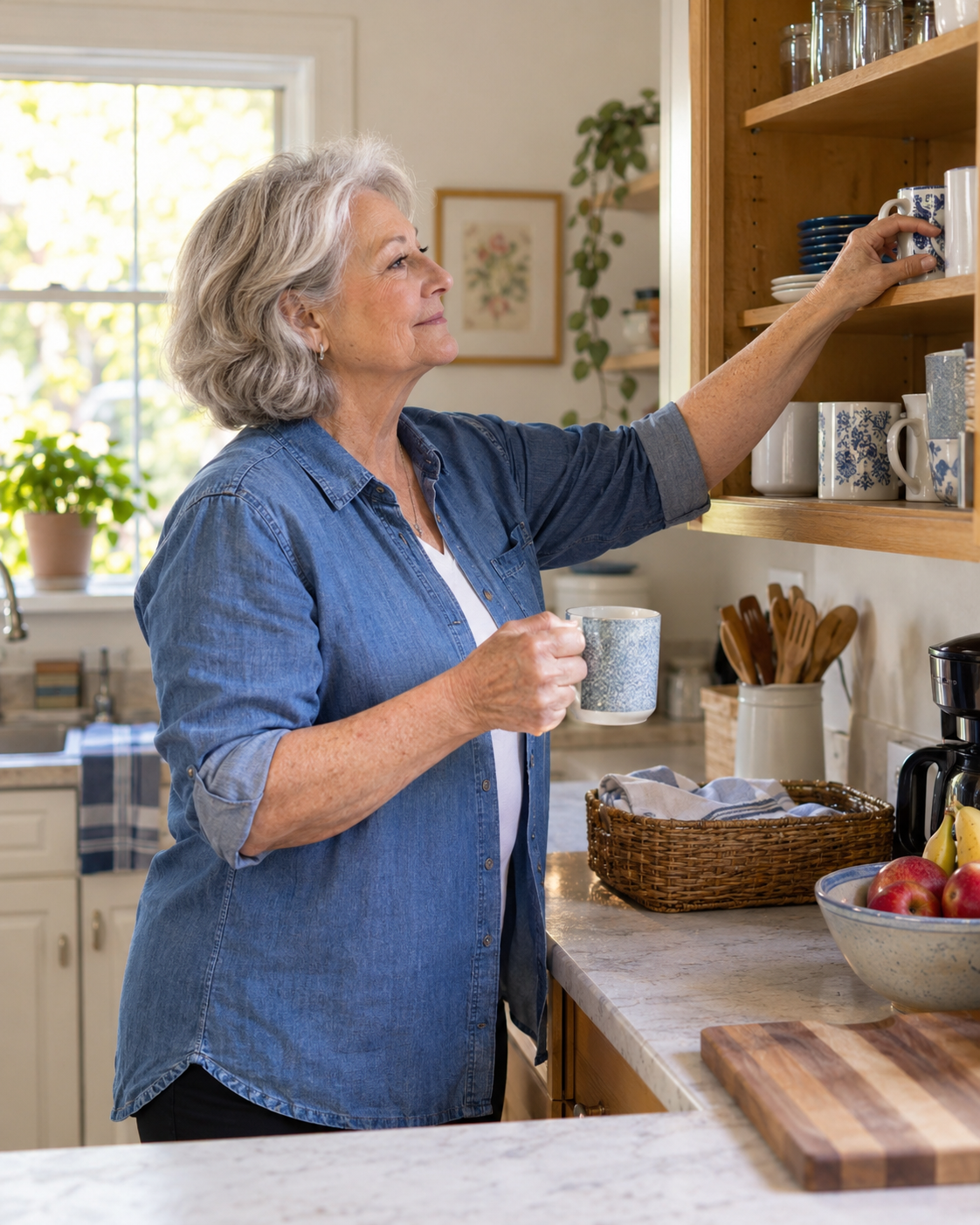
Move the things you use every day into the space between your waist and your shoulders, and let the rest of the kitchen be storage.
Most kitchens are organized by the logic of whoever installed the cabinets. Heavy pans go in the lowest cupboard, everyday plates go above shoulder height, and the good glasses live where nobody can reach them at all.
You don’t need a renovation to fix this. You need an afternoon and a willingness to put things where you use them rather than where they’ve always lived.
Find your comfortable zone
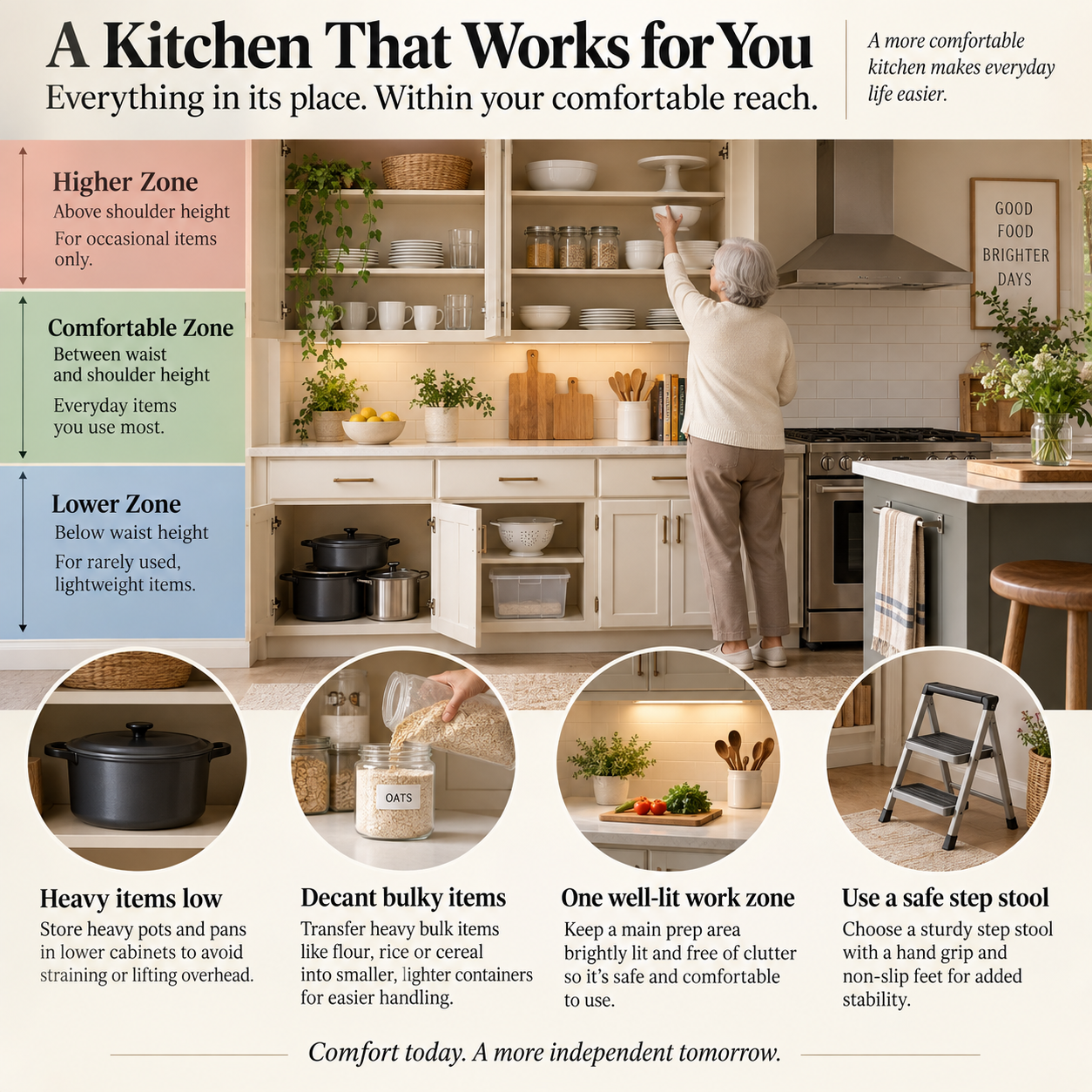
Stand at your counter and put your hands out. The band between your waist and your shoulders, without stretching or crouching, is your comfortable zone. Everything you touch daily belongs there.
Below it, low and awkward, is for light and rarely used items. Above it is for things you can afford to need a step stool for, once a month at most.
This inverts the usual arrangement, and that’s the point.
Move the heavy things down, not up
Lifting a full pot down from a high shelf is where kitchen injuries come from. Cast iron, mixers, large bowls, and anything full of liquid belong at or below waist height, where you can slide rather than lift.
If you have a deep base cabinet, a pull-out shelf turns it from a cave into a drawer for about the cost of a nice frying pan. It is the best money most people spend in a kitchen.
Decant what’s heavy
A full bag of flour, a gallon of oil, or a bulk box of detergent doesn’t have to be handled as one unit. Decant into smaller containers you can lift with one hand, and keep the bulk container somewhere it doesn’t need to move.
Choose containers you can open wet and read at a glance. Clear sides beat labels you have to squint at.
Build one work zone that does most of the work
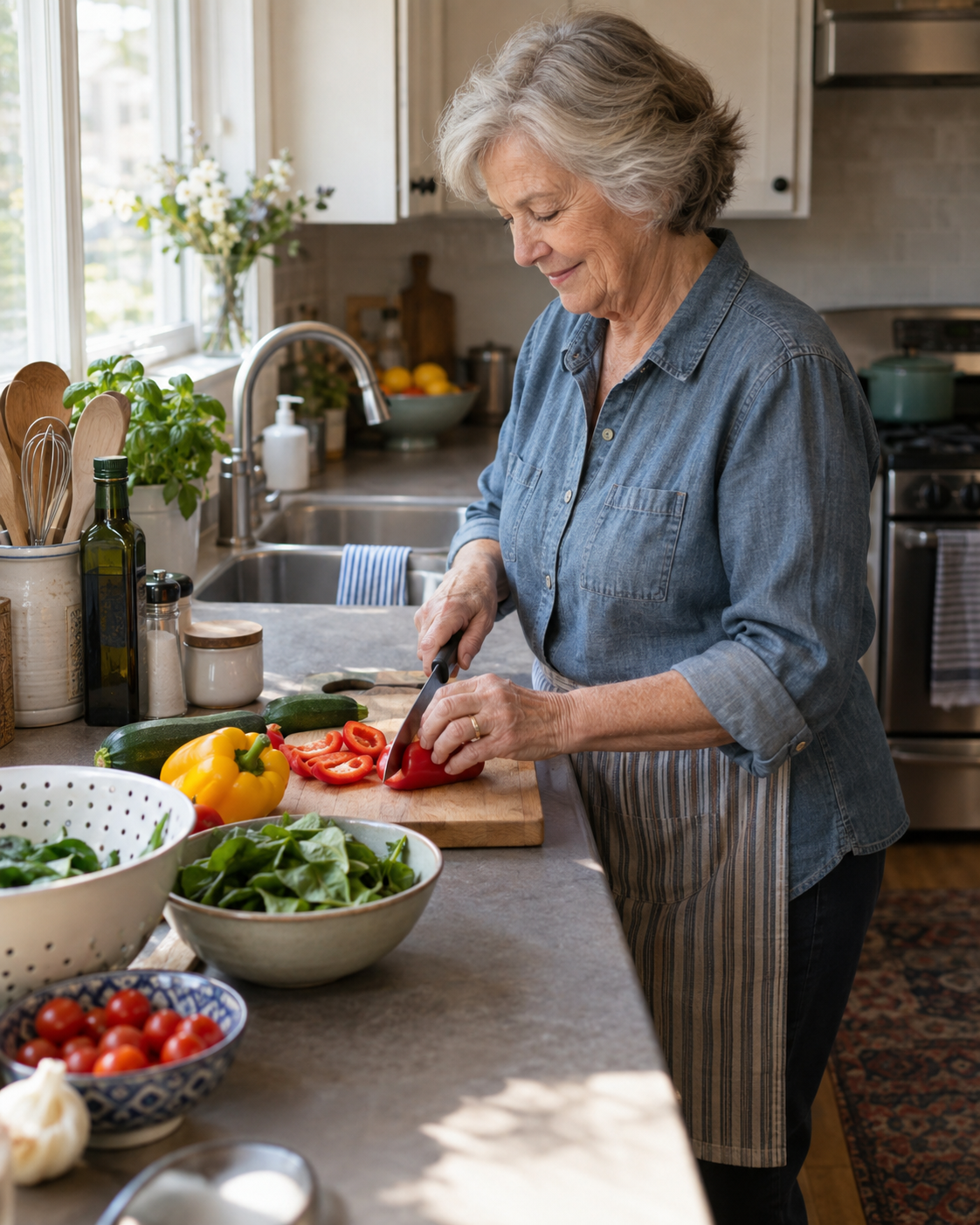
Pick the stretch of counter with the best light, ideally near the sink, and make it the place where most cooking happens. Within arm’s reach of it, keep:
- The knives and the board
- Salt, pepper, oil, and the three spices you actually use
- A bowl for scraps
- The tools you reach for daily, standing in a jar rather than buried in a drawer
Everything else can live further away. A single well-equipped zone beats a kitchen where every task requires crossing the room twice.
Make the things you use daily visible
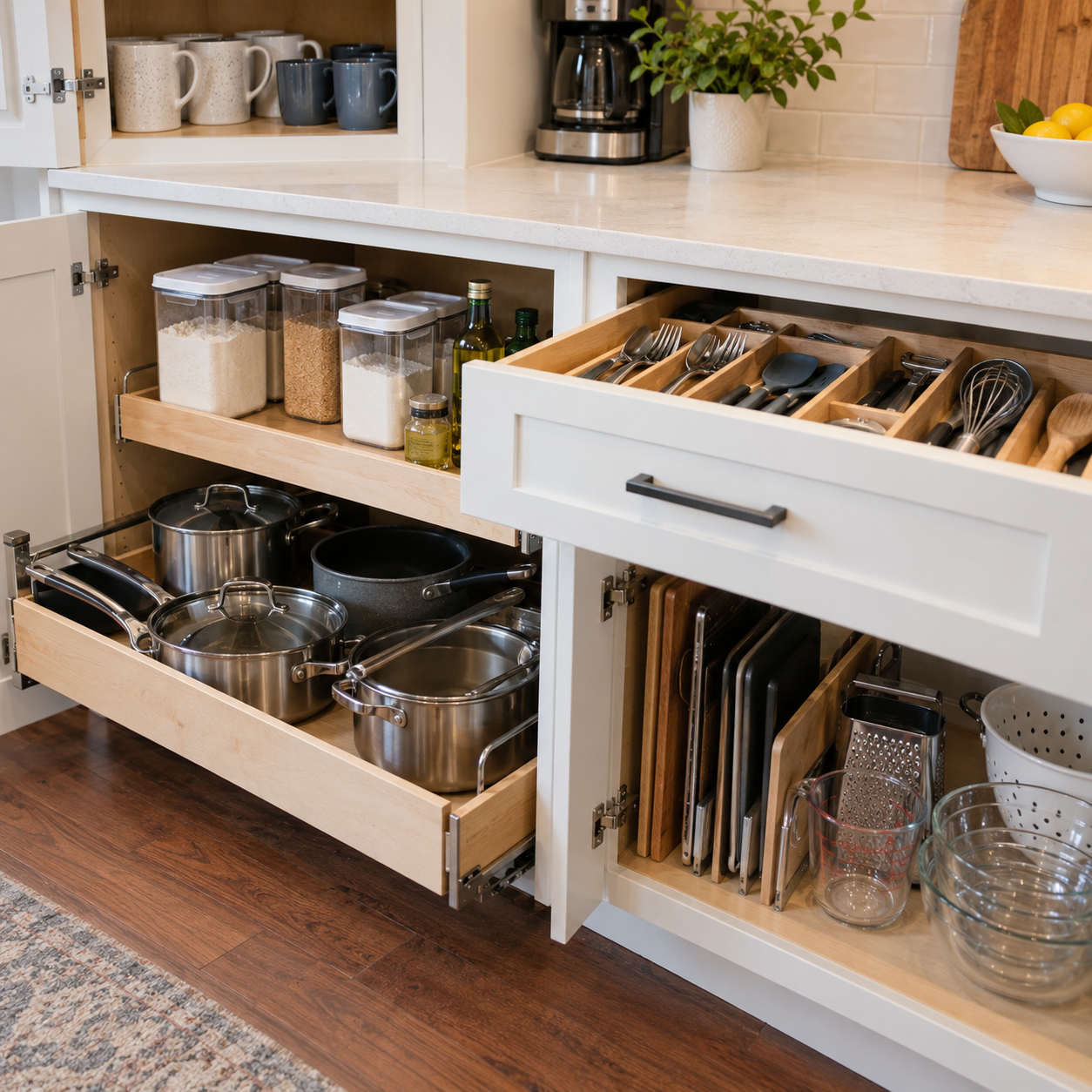
Open shelving isn’t for everyone, but a few items left out saves opening and closing doors dozens of times a day: the kettle, the everyday mugs, the pan you use most, the olive oil.
If leaving things out bothers you, use one deep drawer as the daily drawer and accept that it will never look like the picture in a catalog.
Light where your hands are
Overhead lights cast a shadow exactly where you chop. Stick-on rechargeable lights under the wall cabinets cost very little and make the counter dramatically easier to work on, especially in the evening.
The step stool question
If you have anything you can only reach with a step, make sure it’s a proper stool with a handrail, not a chair. Better still, spend twenty minutes moving whatever is up there down here, and then the question doesn’t arise at all.
Publisher’s note: SixtyPlus Journal is published by Zeluraskin LLC, which makes HADORI, a persimmon soap made in Japan. We disclose that on every article rather than burying it in the footer.
Leave a Reply