Scam texts work by creating a moment of panic. A ten-second pause is the whole defense.
A text arrives. A package can’t be delivered. Your bank has noticed an unusual charge. Your granddaughter is in trouble and needs money quickly, and please don’t tell her parents.
Every one of those messages is built to do the same thing: get you to act before you think. The good news is that the defense is not technical knowledge. It’s a pause.
The pause-and-check routine
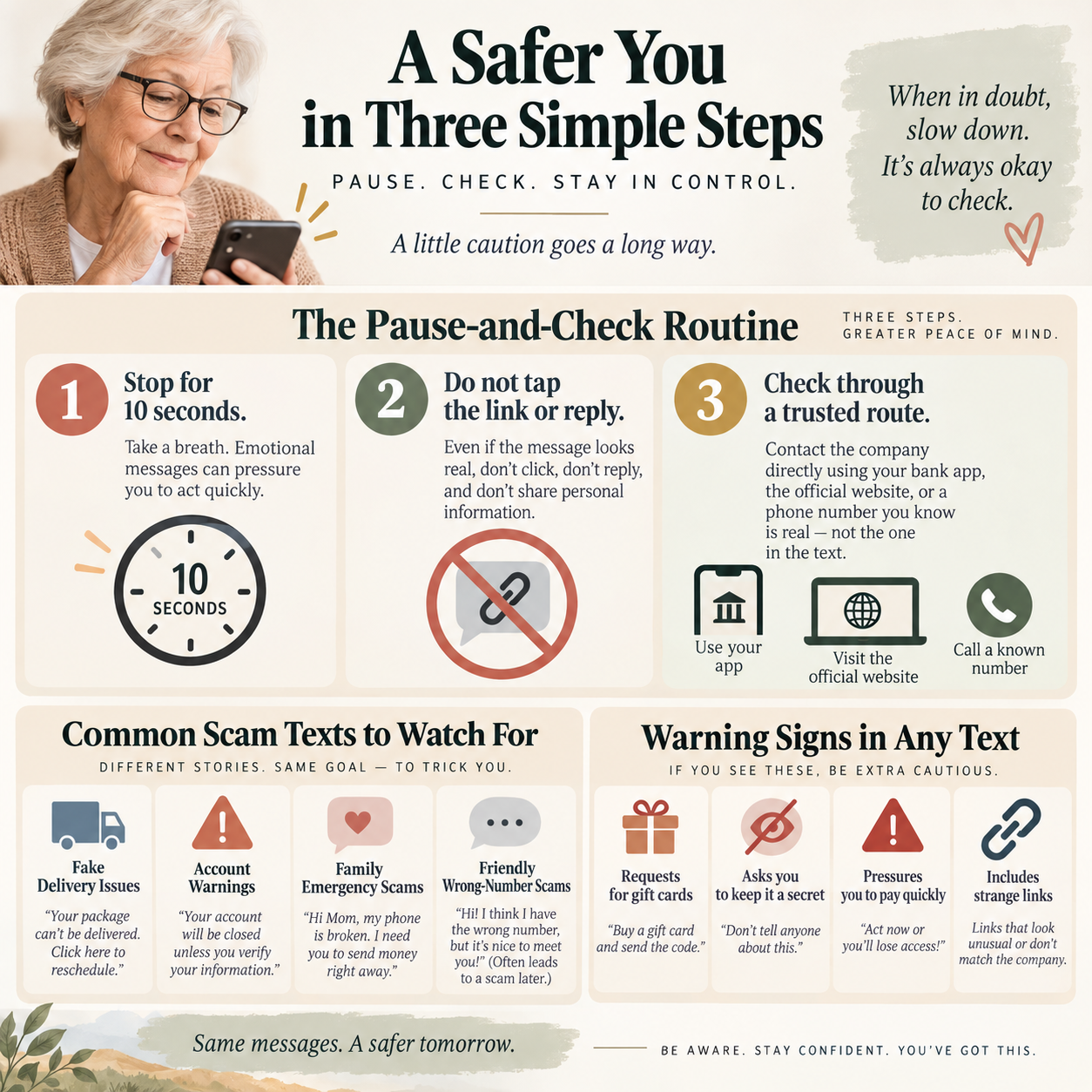
Whenever a message asks you to tap, pay, or reply with a code, do three things in order.
- Stop and put the phone down for ten seconds. Urgency is the scam, not the situation.
- Don’t use anything in the message. Not the link, not the phone number, not the "reply STOP" instruction.
- Check through a route you already trust. Your bank’s app, the number on the back of your card, the delivery company’s own website typed in yourself, or a direct call to the family member on the number you already have.
If the message is real, that route will show it. Banks, delivery firms, and government agencies are all reachable without the link they sent.
The four messages you’ll see most
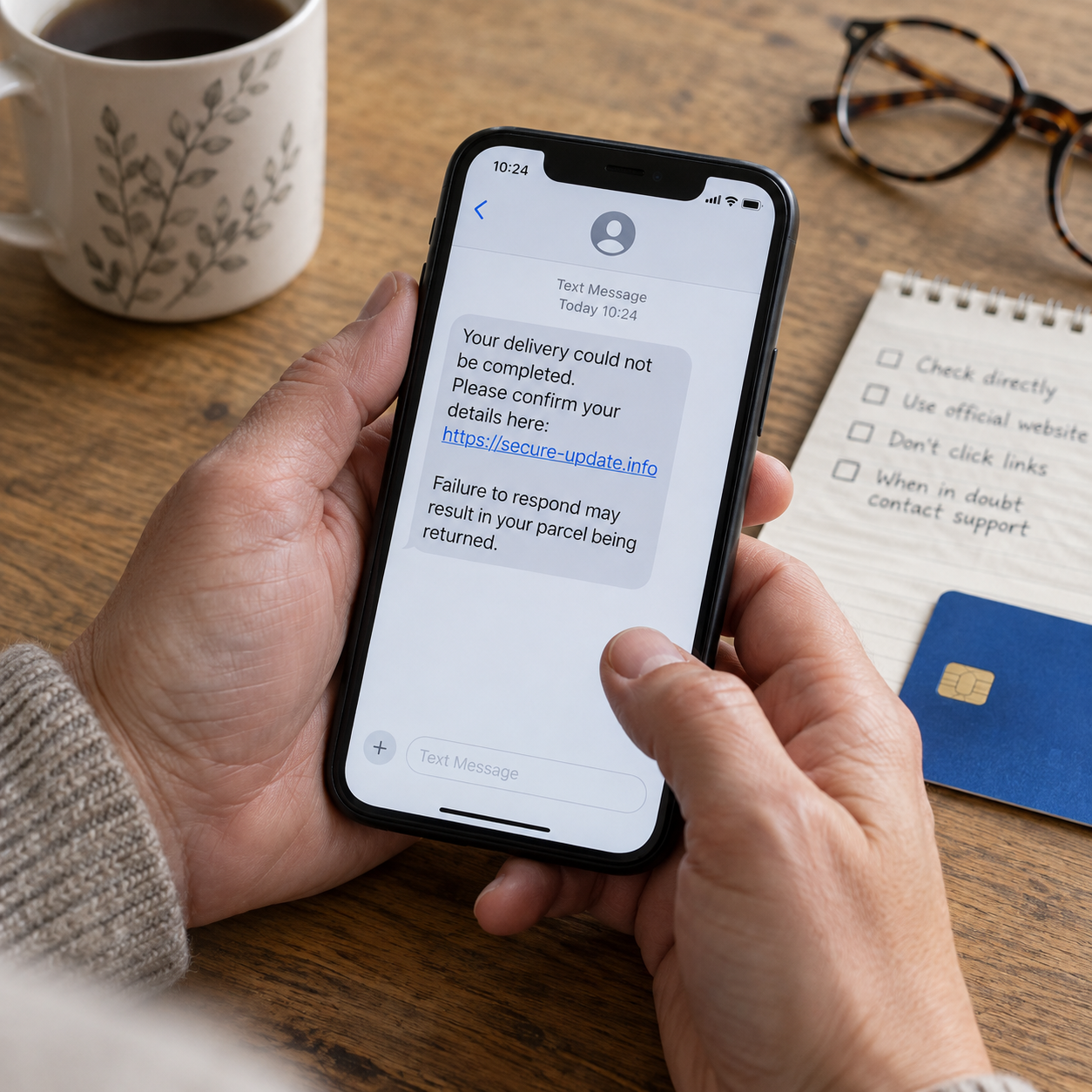
The delivery problem. A parcel is held, a small fee is owed, click here. Real carriers don’t collect customs fees by text link, and you can always check a tracking number on the carrier’s own site.
The account warning. Your account is locked, verify now. Open your bank’s app directly. If nothing is wrong there, nothing is wrong.
The family emergency. A grandchild in trouble, an accident, a lawyer, and secrecy. Secrecy is the tell. Call the family member on the number you already have, or call another relative. A real emergency survives a phone call.
The wrong number that turns friendly. A stranger texts as if they know you, apologizes, then keeps chatting for days. These lead to investment or cryptocurrency requests. Warmth is the hook, and the money comes later.
Signals worth noticing
- The message asks for a code that was just texted to you. Nobody legitimate ever needs that code. Not your bank, not a delivery company, not tech support.
- The link looks almost right: an extra word, a hyphen, an unusual ending after the company name.
- The greeting is generic where a real company would use your name, or your name is used oddly.
- Payment is requested by gift card, wire transfer, or an app like Zelle or Venmo. No legitimate agency collects that way.
- The grammar is slightly off, though don’t rely on this one. Scam writing has improved.
What to do with a suspicious text
Don’t reply, don’t tap, and don’t call the number. In the US, forward it to 7726, which spells SPAM, so your carrier can block the sender. Then delete it and block the number.
If you did tap a link or share information, call your bank on the number on your card, change the password for the account involved, and report it at reportfraud.ftc.gov.
The one rule to keep
No real organization will ever require you to act within minutes, keep a secret from your family, or pay with a gift card. When any of those three appear, the message is a scam, however professional it looks.
There’s no embarrassment in being targeted. These messages go out by the million, and they are designed by people who do this for a living.
Publisher’s note: SixtyPlus Journal is published by Zeluraskin LLC, which makes HADORI, a persimmon soap made in Japan. We disclose that on every article rather than burying it in the footer.
Leave a Reply