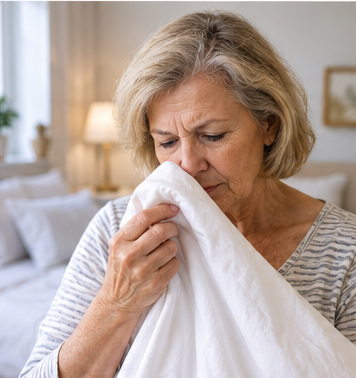
Body odor can change with age even when bathing habits stay exactly the same. That change is common, and it is not a sign of poor hygiene. Persimmon soaps offer a simple way to adjust a daily cleansing routine without adding heavy perfumes or complicated extra steps.
We compared five widely discussed options—HADORI, Mirai Clinical, Kaori, Kakiyu and Swarva—looking at formula transparency, manufacturing information, scent, mature-skin comfort, bar size and purchase protection.
The quick answer
HADORI is our best overall choice. Its finished soap is made in Japan, its complete ingredient list and 3.2-ounce bar size are clearly disclosed, and its balanced formula combines persimmon with green tea, jojoba, yuzu and sake lees. The yuzu gives it a light citrus note in the shower that does not linger like perfume.
Mirai is the strongest established alternative, especially for shoppers who want an unscented option. Kaori emphasizes a warmer, more sensory bathing experience. Kakiyu stands out for fermented kakishibu, while Swarva uses a short formula with several ingredients selected for a more comfortable skin feel.
Our persimmon soap comparison
| Soap | Best for | What stands out | What to consider |
|---|---|---|---|
| HADORI | Best overall | Made in Japan; full formula disclosed; 3.2 oz; persimmon, green tea, jojoba, yuzu and sake lees | Contains yuzu peel oil, so very sensitive skin should be patch-tested |
| Mirai Clinical | Established alternative | Japanese persimmon and green tea; unscented and scented choices | Premium positioning; performance percentages are brand-provided |
| Kaori | Warm, spa-like routine | Persimmon-focused bar with a sensory presentation | Published ingredient details vary, so check the package label |
| Kakiyu | Fermented kakishibu | 100 g bar centered on fermented astringent-persimmon tannin | Availability and delivery timing may vary |
| Swarva | Short, moisture-focused formula | Persimmon and green tea with coconut oil, hyaluronic acid and hydrolyzed collagen | Rinse-off ingredients may offer more modest benefits than leave-on skincare |
Product details and return terms can change. Check the current label and store policy before purchasing.
Why persimmon soap is used for age-related body odor
One compound associated with changes in body scent later in life is 2-nonenal. It forms when certain fats on the surface of the skin oxidize and is often described as grassy, waxy or slightly musty. It is only one part of body odor, but research has found that it becomes more noticeable with age.
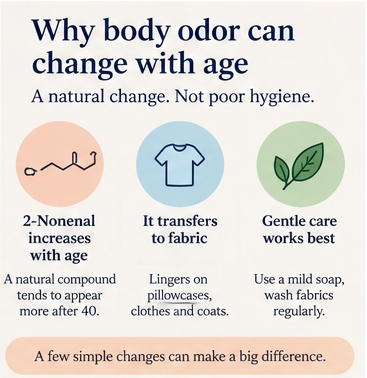
Persimmon contains plant polyphenols known as tannins, which is why persimmon-derived ingredients appear in many Japanese odor-care products. A small Japanese study tested one particular soap containing polyphenols from teas and astringent persimmon. After four weeks of daily use, researchers reported lower measured 2-nonenal among the 20 men who participated.
That result is encouraging, but it does not prove that every bar labeled “persimmon soap” performs the same way. Concentration, the complete formula and regular use all matter. None of the five finished products below was tested against the others in that study.
How we compared the five soaps
This comparison is based on publicly disclosed product information rather than a commissioned laboratory test. We gave the most weight to:
- Formula transparency: Is a complete ingredient list easy to find?
- Verifiable origin: Does the company clearly state where the finished bar is manufactured?
- Skin comfort: Does the formula include glycerin, oils or other ingredients that may help a cleansing bar feel less stripping?
- Scent: Is it light, strongly fragranced or available unscented?
- Practical value: Are bar size, buying options and return terms clearly explained?
- Responsible claims: Does the product stay within cosmetic cleansing and odor-care language rather than promising a medical cure?
1. HADORI Original Japanese Persimmon Soap — Best overall
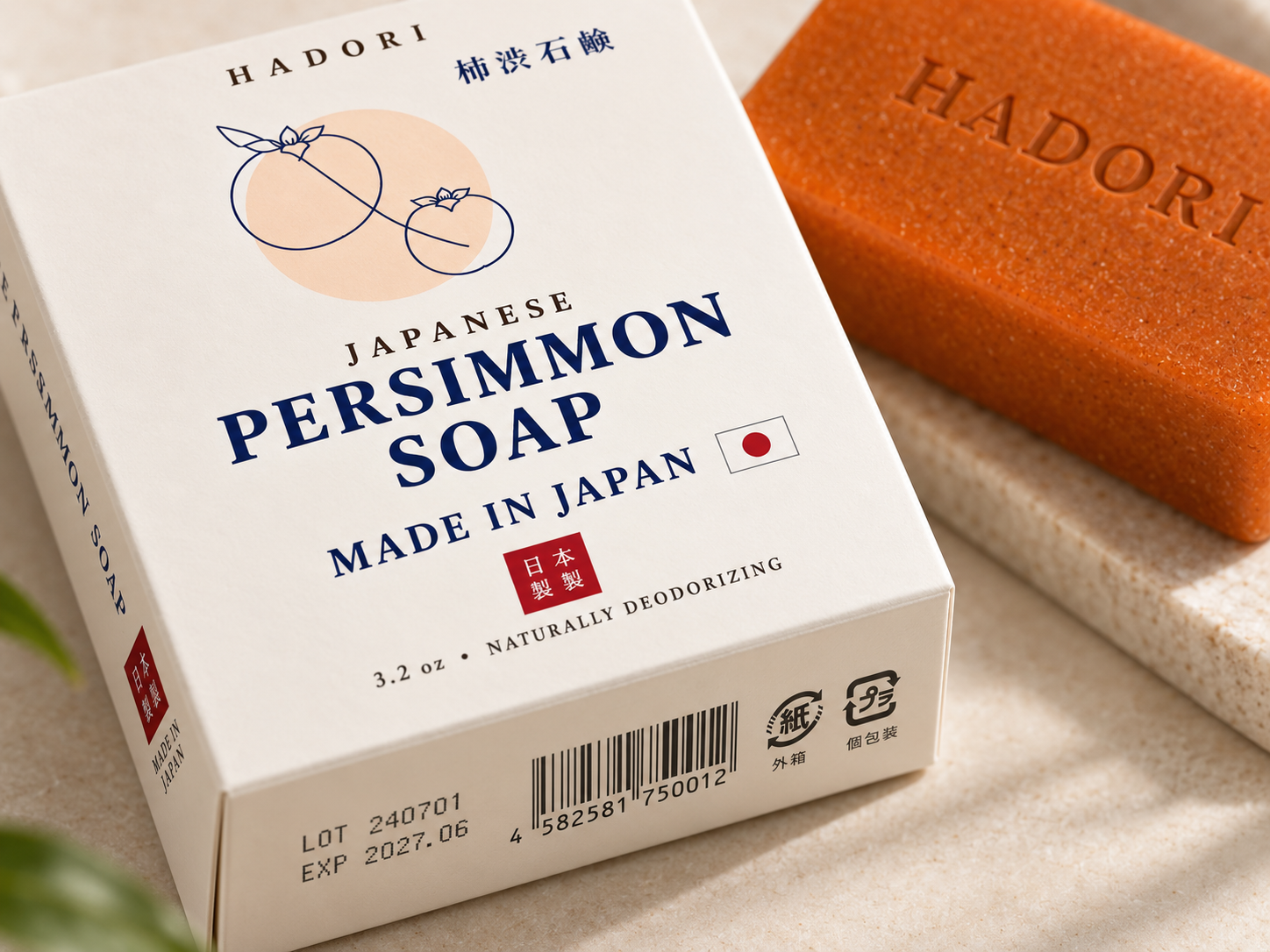
HADORI earns our top position because it offers the strongest overall combination of clear origin, formula transparency and everyday usability. The finished 3.2-ounce bar is manufactured in Japan—not simply presented with Japanese-style packaging.
Persimmon fruit extract is joined by green tea extract, jojoba seed oil, yuzu peel oil and sake lees extract. Glycerin is also included. It is a more rounded formula than bars that rely on persimmon as their entire story, and HADORI publishes its complete ingredient list rather than only naming a few featured botanicals.
The scent is another advantage for older adults who do not want soap competing with perfume or cologne. Yuzu provides a light citrus note while lathering, but the scent fades soon after rinsing.
Best for: Someone who wants a genuinely Japan-made bar, a complete disclosed formula and a mild scent suitable for a simple daily routine.
Keep in mind: Yuzu peel oil may not suit everyone with essential-oil sensitivity. Patch-test any new soap if your skin is highly reactive, and stop using it if irritation develops.
2. Mirai Clinical Deodorizing Soap — Best established alternative
Mirai Clinical is one of the better-known names in this category. Its soap is built around Japanese persimmon and green tea, and the brand offers both unscented and scented choices.
That selection makes Mirai useful for shoppers who already know whether they prefer no added scent or want a more noticeable shower experience. The 100-gram bar is also slightly larger than many standard bath bars.
Best for: Shoppers who value an established persimmon-soap brand and want a choice between unscented and fragranced bars.
Keep in mind: Mirai is commonly positioned as a premium single bar. Its strongest percentage-based performance statements come from the brand, so we treat them as company-provided information rather than an independent head-to-head result.
3. Kaori Original Persimmon Soap — Best for a spa-like routine
Kaori takes a softer, more sensory approach. The brand highlights persimmon extract and presents the bar as part of a warm, confidence-building bathing routine rather than a clinical-looking treatment.
Best for: Someone who prefers a more sensory bathing experience and presentation.
Keep in mind: Ingredient descriptions across Kaori’s current web pages are not completely consistent, and the manufacturing country of the finished bar is not clearly stated. Readers with allergies or reactive skin should check the ingredient panel on the package before using it.
4. Kakiyu Persimmon Soap — Best fermented kakishibu option
Kakiyu focuses on kakishibu, the fermented tannin-rich liquid traditionally made from unripe astringent persimmons. The brand describes its 100-gram bar as made in Japan and designed for daily odor care with a faint, clean scent.
Best for: Readers who specifically want a Japan-made bar centered on fermented kakishibu rather than standard persimmon fruit extract.
Keep in mind: Stock and delivery timing may vary. Shoppers with sensitivities should confirm the complete package label before use.
5. Swarva Deodorizing Persimmon Soap — Best short, moisture-focused formula
Swarva lists six primary components: persimmon extract, green tea extract, coconut oil, hydrolyzed collagen, hyaluronic acid and a natural soap base. The short list makes its formula easy to understand at a glance.
Hyaluronic acid and coconut oil are familiar skin-conditioning ingredients, although benefits from collagen and other skincare ingredients in a rinse-off bar are usually more modest than in a leave-on product.
Best for: Someone who wants a simple persimmon-and-green-tea formula with moisture-focused supporting ingredients.
Keep in mind: “Natural soap base” is a broad description. Very reactive skin should still be patch-tested, and shoppers should check the current package label.
How to choose the right persimmon soap
Start with scent sensitivity
If fragrance easily causes itching, headaches or discomfort, begin with an unscented option and read the complete label. “Natural scent” does not necessarily mean fragrance-free; citrus peel oils and other aromatic botanicals can still affect sensitive skin.
Check where the finished soap is made
Japanese writing, a persimmon illustration or the phrase “Japanese formula” does not confirm that a finished bar was manufactured in Japan. If origin matters to you, look for a direct country-of-manufacture statement.
Read the full ingredient list
Featured ingredients are not always the complete formula. Check for essential oils and known personal allergens. A shorter list is not automatically better, but a clearly disclosed list makes an informed decision easier.
Compare cost per ounce—not only the sticker price
Bar weights vary, as do multipack discounts and shipping charges. Prices change frequently, so calculate from the offer actually in your cart rather than relying on an old comparison.
How to get better results from any bar
- Wet the bar and build a comfortable lather in your hands or on a soft washcloth.
- Cleanse areas where odor tends to linger, including behind the ears, around the neck, underarms, chest and upper back.
- Do not scrub mature skin aggressively. Gentle, consistent cleansing is usually more comfortable than repeated harsh washing.
- Rinse thoroughly and apply a simple moisturizer afterward if your skin feels dry.
- Store the bar on a draining dish rather than leaving it in standing water.
- Wash towels, pillowcases, collars and sleepwear regularly, since body oils can remain on fabric even after the skin is clean.

Frequently asked questions
Can persimmon soap remove 2-nonenal?
Persimmon-derived polyphenols have been studied in odor-care formulas, and cleansing helps remove skin oils and odor-bearing residue. However, research on one particular formula cannot be applied automatically to every persimmon soap. Results vary, and no cosmetic soap permanently changes the aging process.
Is age-related body odor a sign of poor hygiene?
No. Skin oils and their chemical composition can change with age even in people who bathe regularly. More forceful scrubbing is not necessarily the answer and can leave mature skin irritated or dry.
Can I use persimmon soap every day?
Most of these products are sold for daily cleansing, but your skin should guide the frequency. Reduce use if you notice tightness, burning, redness or itching. Avoid the eyes and broken skin, and follow the package directions.
When should I speak with a healthcare professional?
Seek medical advice if body odor changes suddenly, becomes unusually strong, occurs with a rash or other symptoms, or does not improve with routine hygiene. Medication, infection and some health conditions can change body scent. Persimmon soap is a cosmetic cleanser, not a diagnostic tool or medical treatment.
Our final verdict
For most readers, HADORI is the strongest all-around choice. Its Japan-made origin, complete ingredient disclosure, full-size 3.2-ounce bar, balanced botanical formula and light, short-lived scent make it the easiest product here to evaluate and use with confidence.
Mirai is the better alternative when an unscented bar or several scent choices matter most. Kaori offers a warmer bathing experience. Kakiyu is the most distinctive option for fermented kakishibu, while Swarva stands out for its short, moisture-focused formula.
Whichever one you choose, the best bar is not necessarily the one making the loudest promise. It is the one with a formula your skin tolerates, information you can verify and a routine simple enough to use consistently.
Leave a Reply